At the heart of ethical practice in threat assessment is recognizing the potential stigma. This stigma is attached to any mental health diagnosis, including Autism Spectrum Disorder (ASD). The reality is that most individuals with ASD do not engage in violence. However, a few individuals may have a higher risk of harming themselves or others. This risk is due to a complex combination of factors.
The key question in any threat assessment is: what characteristics might suggest a potential for harm? These characteristics could be related to an individual’s condition or their life circumstances.
It’s crucial to approach such cases without overstating or minimizing the risks involved. Educational leaders and threat assessment teams can often prevent overreactions. They play an important role in helping school staff understand that individuals with ASD are more often misunderstood. These individuals sometimes need help and support rather than being a threat to others.
When it comes to assessing risk, it’s essential to look at each person as an individual and carefully consider the full scope of factors that might influence their behavior. By doing so, threat assessment professionals and educators can provide more accurate, fair, and supportive guidance for all students.
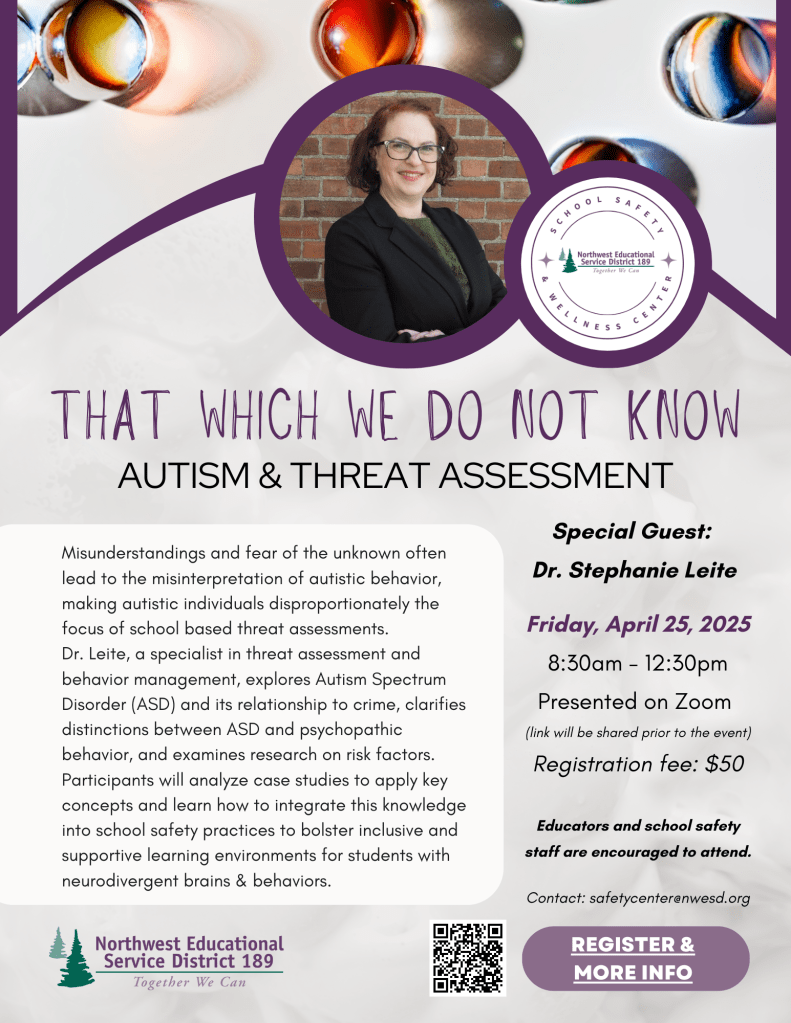
On April 25, we hope you will join us for an in-depth conversation with forensic psychologist and threat management professional, Dr. Stephanie Leite on the intersection of Autism and threatening behaviors. Dr. Leite’s presentation will be followed by guidance from the NWESD Threat Assessment team in conducting equitable and effective threat management for neurodivergent students.
Read more:
- [Article, pdf] Autism Spectrum Disorder and Violence: Threat Assessment Issues
- Dr. Stephanie Leite
- Register: [pdEnroller]

